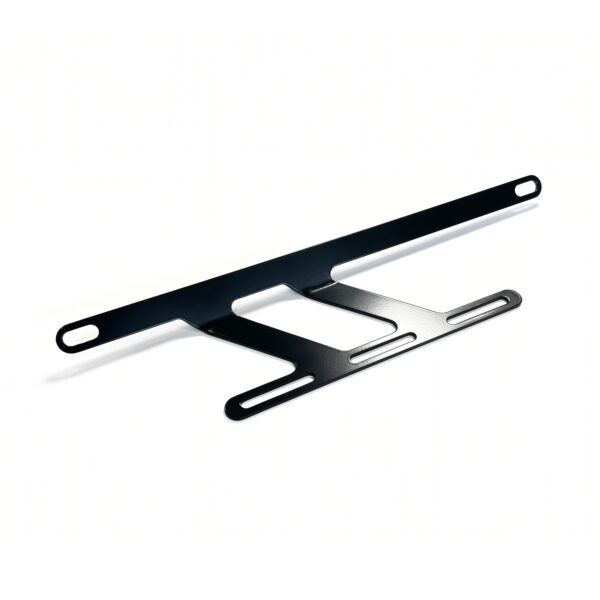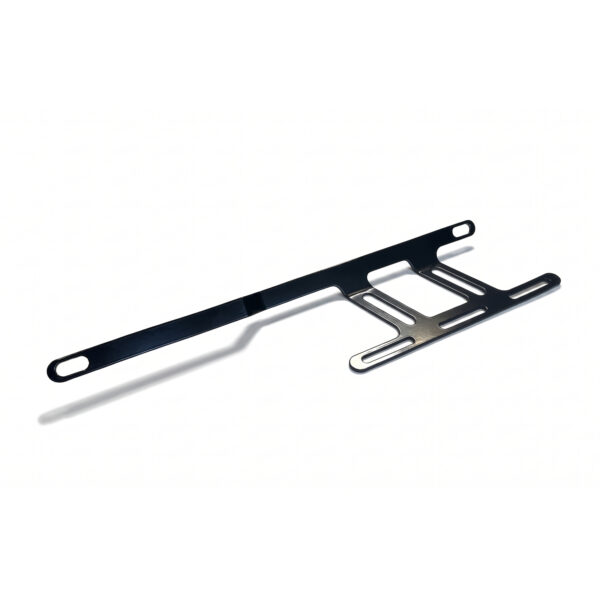
If you have lowered your car, regardless of how, there’s a good chance you now have bump steer. Our steering rack spacer is an economical and straightforward solution to address it – this blog post will discuss how.
What is Bump Steer?
Imagine you’re mid-corner on track and your right wheel hits the curb. In that instant, the wheel is forced upward through its suspension travel. As it does, it momentarily unloads, resulting in the wheel not just moving vertically, but it also rotates (steers) slightly as well. This is bump steer.
Put another way, bump steer is the unintended change in your wheel’s toe angle as it moves up or down through its suspension travel. Every car has some level of bump steer, however, this is something that can (and should) be minimised quite easily.

What Causes Bump Steer?
As the coilover compresses and expands, the upper and lower control arms swing across a pre-determined arc. The tie-rod end (which connects the steering rack to the wheels) has a separate swing arc; if this doesn’t match the suspension movement, then the tie-rod won’t behave consistently across the suspension travel.
Why is Bumpsteer a Problem?
When you drop your car on coilovers, you change the angle of the arcs for some of your components, but not all of them. In doing so, you’re changing some of the arcs, but not all of them.
When the arcs are close but not dead accurate, the effects of bump steer aren’t significant. However, as you get further away, you’ll notice that the steering reacts strongly to cambers in the road, and you lose cornering predictability, especially when you’re driving more aggressively.
It may also mean that:
- Your steering wheel may twitch over mid-corner bumps.
- The car might also ‘tramline’ or follow uneven road surfaces more aggressively.
- You lose predictability across fast transitions or uneven surfaces.
For anyone serious about driving, whether it’s track days or mountain runs, it’s a problem worth solving.
HFM.Parts’ Bump Steer Solution for the NA Mx-5:
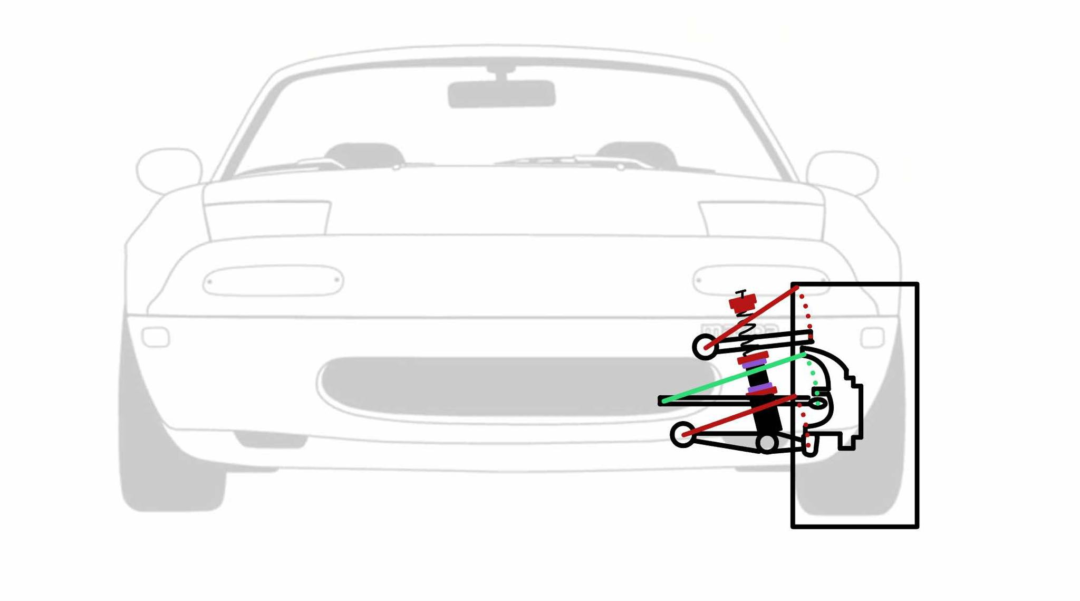
The goal is to correct the arcs. To visualise this, you can draw some lines from the tie-rod arms as well as from the upper and lower control arms and see where they intersect. Ideally, you want them to intersect at the same point.
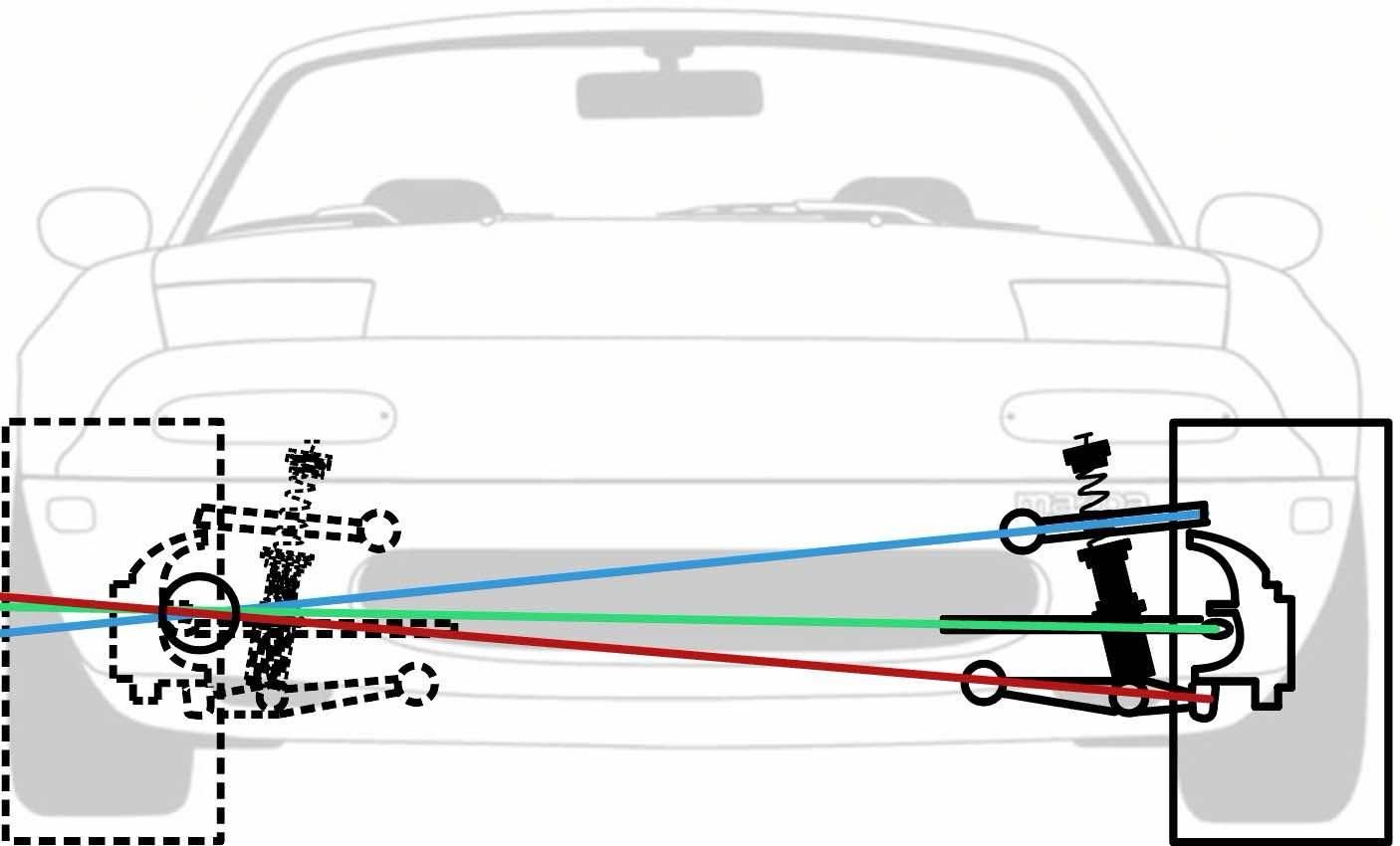
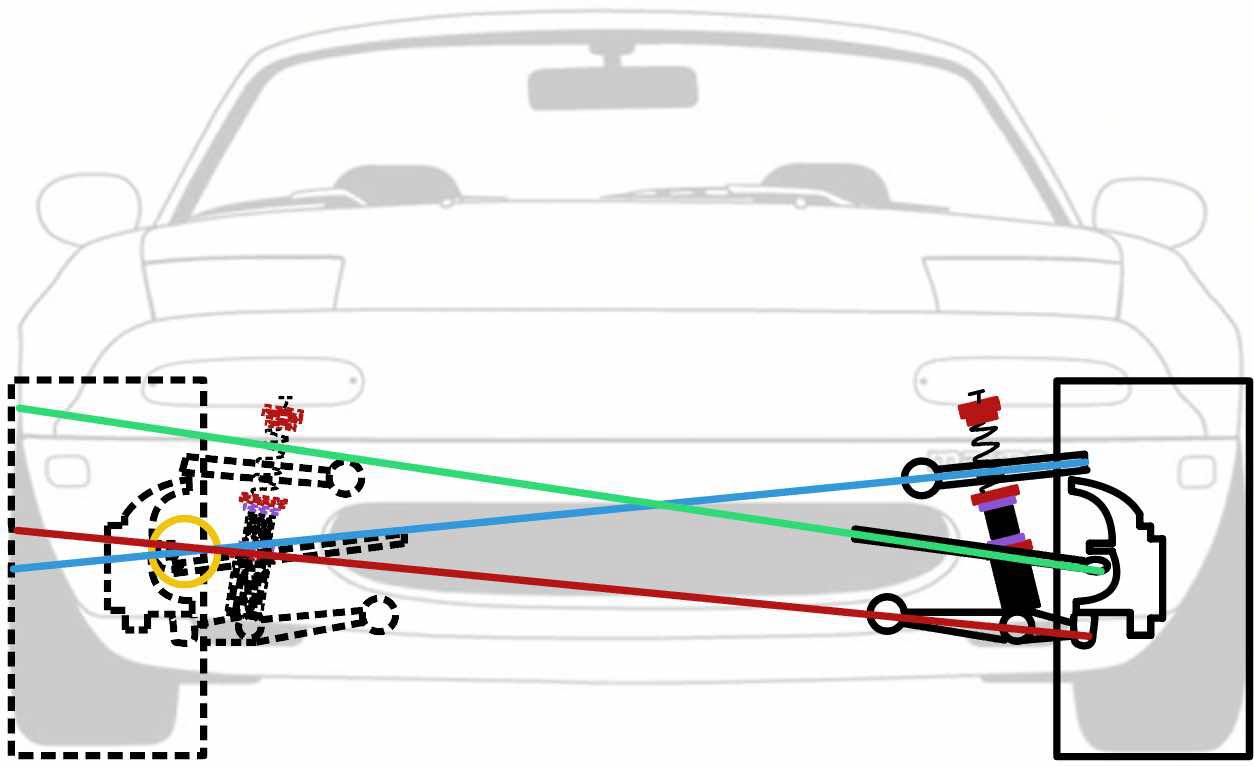
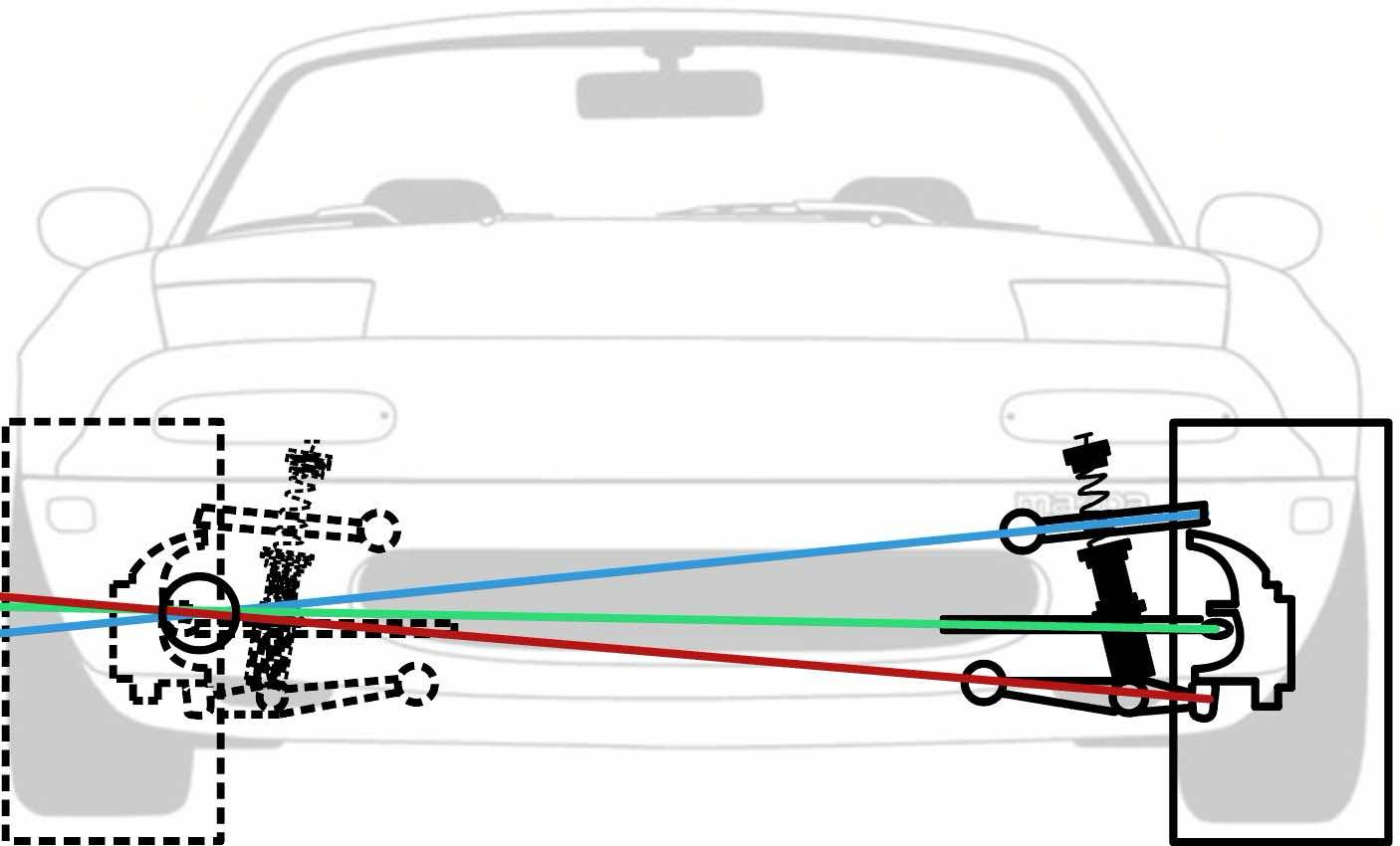
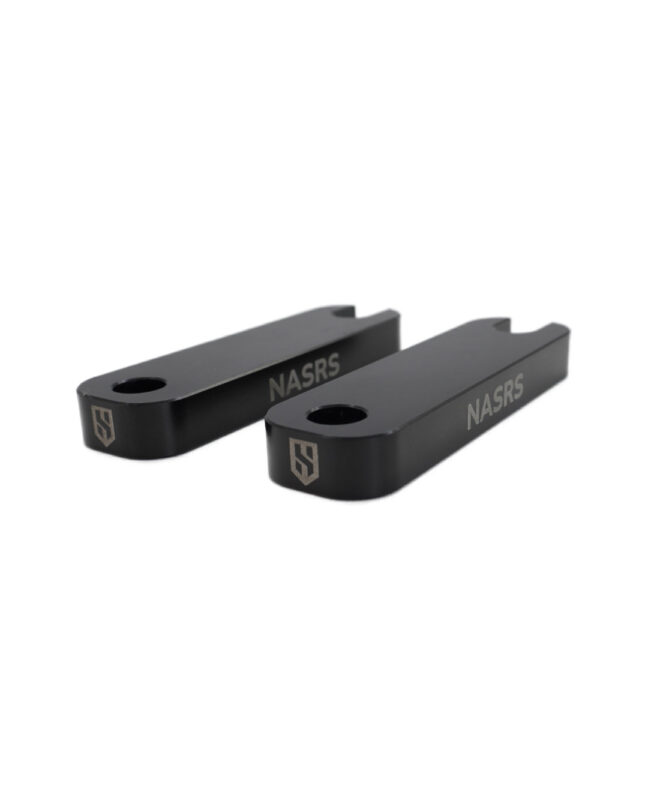
The diagrams above exaggerate geometry for clarity, but the idea holds. At stock height, the tie-rod, upper and lower control arms intersect at a common virtual point. When lowered, that tie rod angle changes, and the intersection is lost – introducing bump steer. The NASRS repositions the rack, bringing that tie-rod arc back into allignment with the control arm arcs.
How Effective is this Component?
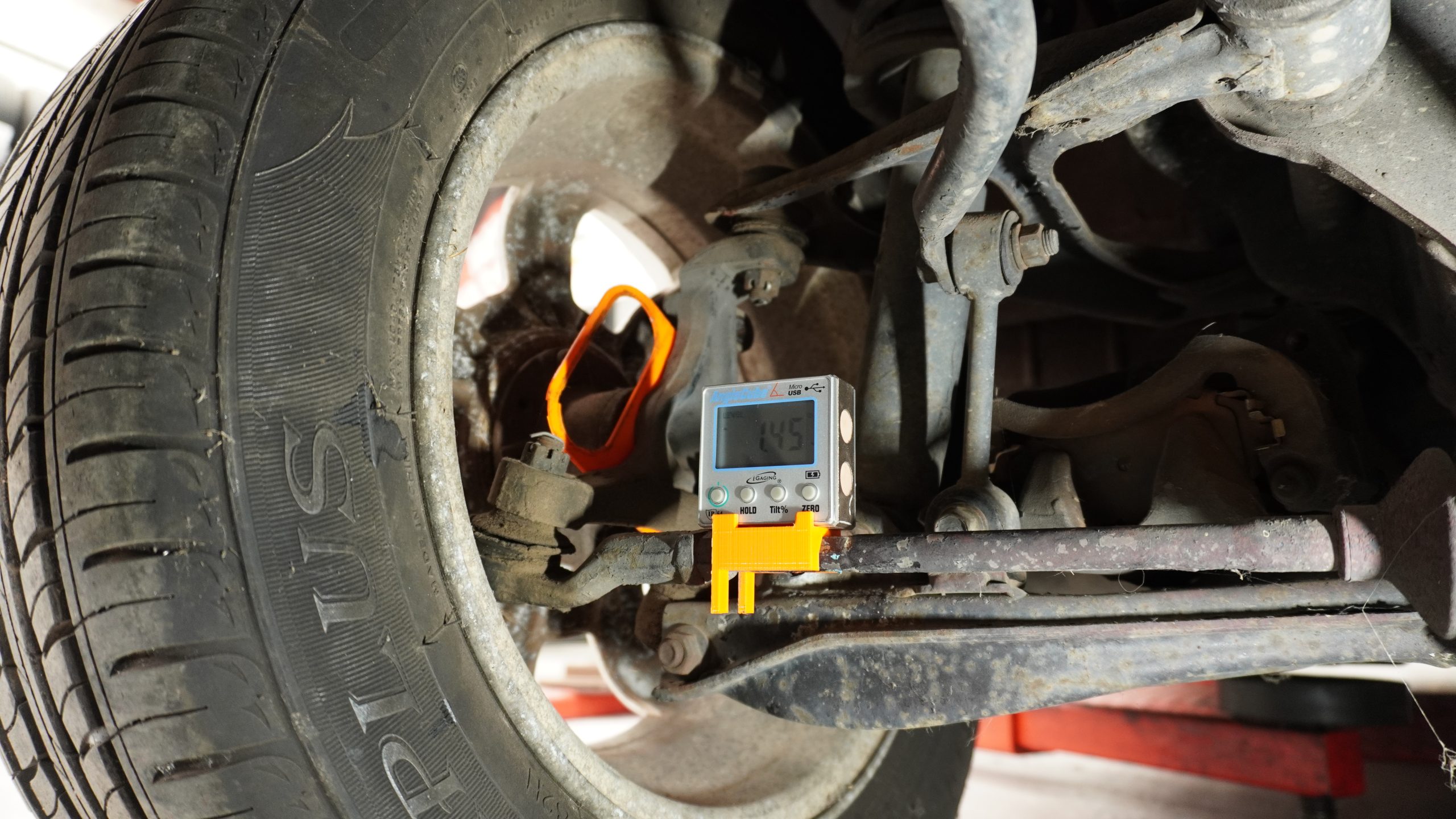
We decided to use a digital angle finder to measure the angle of the tie-rod arm in three different conditions:
- OEM Ride Height
- Lowered Ride Height (~125mm pinch weld height)
- Lowered Ride Height with Steering Rack Spacer (NASRS) (same ~125mm pinch weld height)
This approach allows us to easily and efficiently obtain reliable and repeatable data points. We believe that the data outputs from this method would be more accurate than those delivered from alternative approaches and sufficient to demonstrate the purpose of this product. For reliable and accurate data outputs, we also 3D printed a mount that allowed us to calibrate the digital angle finder in both x and y directions.
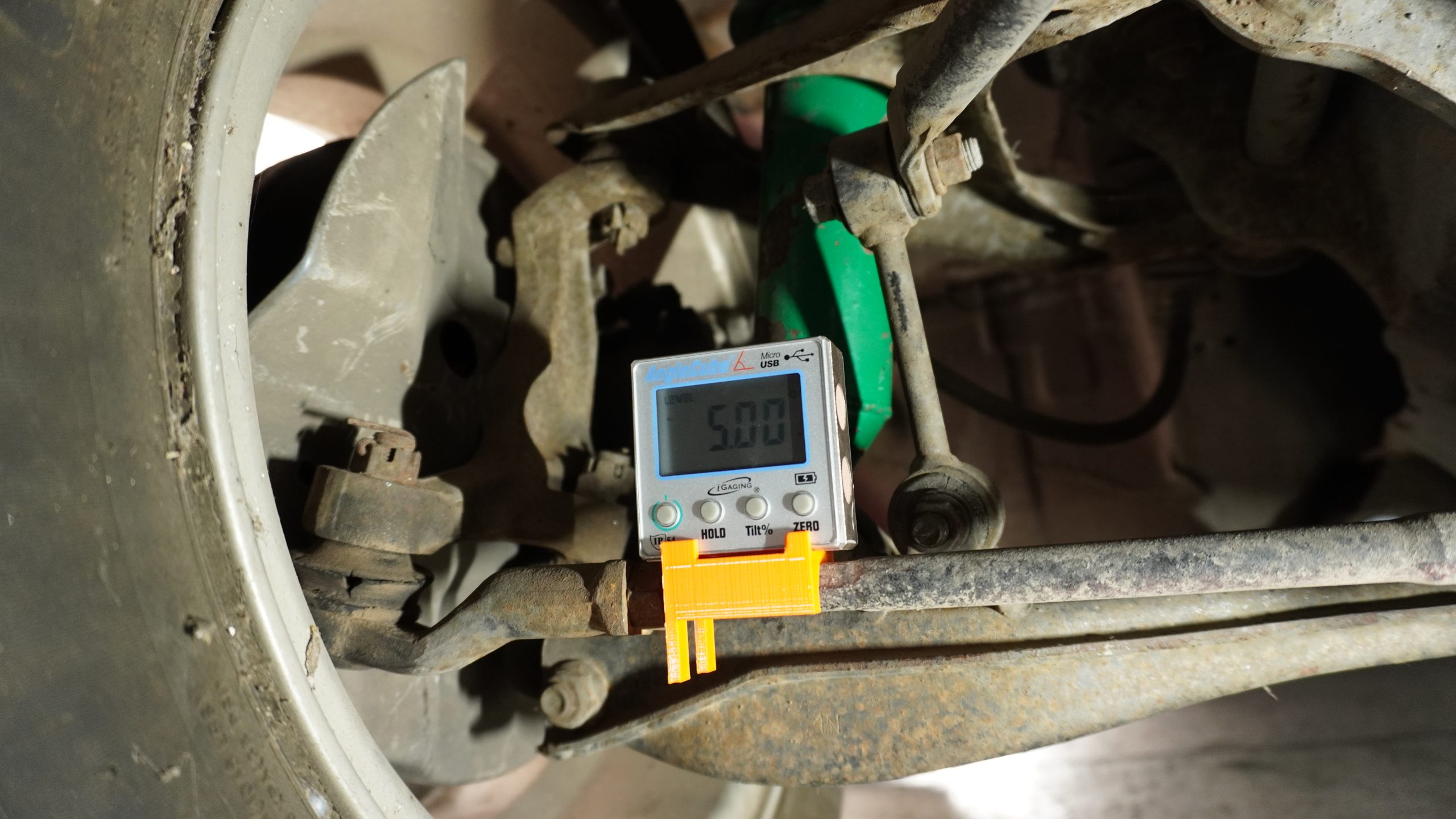
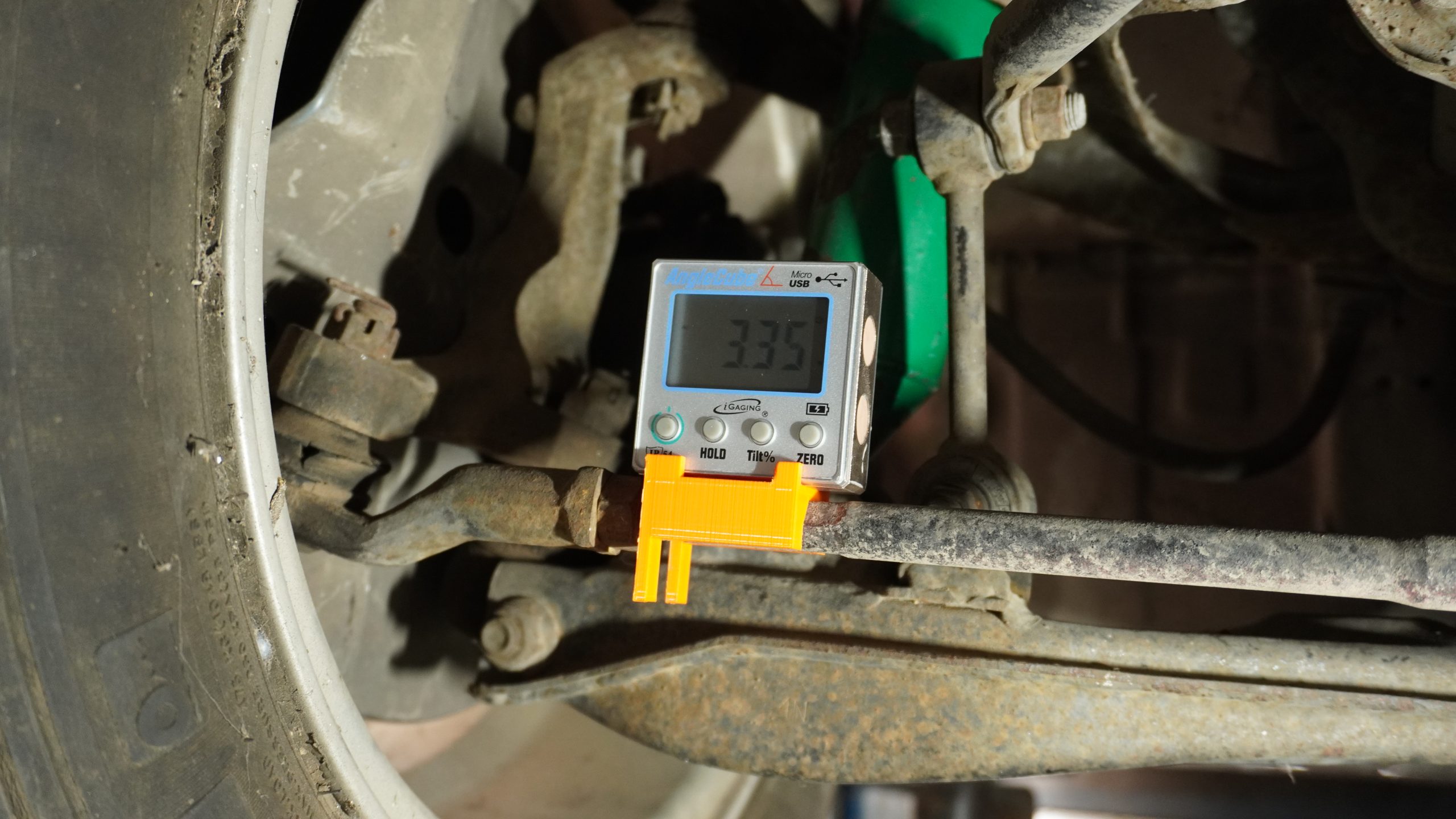
| Stock Ride Height | Lowered Ride Height | Lowered Ride Height + Steering Rack Spacer | |
| Angle of Tie-Rod Arm | 1.45° | 5.0° | 3.35° |
These three configurations, along with the images above, help visualise the theory we’ve just discussed. The numbers highlight a clear trend: lowering your Mx-5 increases the angle of the tie-rod arm, leading to more pronounced bump steer. This data set also demonstrates how the NASRS helps correct this by realigning the steering rack closer to its original geometry.
That said, it’s worth noting that the NASRS wasn’t able to return the tie rod angle back to the factory 1.45° spec. This was physically limited due to the steering assembly approaching the underside of the engine sump. Contact between these components would’ve risked potential damage.

With that said, you’re still looking at ~ 46% improvement in reduction in tie-rod arm angle compared to a lowered Mx-5 without correction. This translates to a noticeable improvement in real-world driving, especially if you run a de-powered steering rack. You’ll feel this improvement particularly in uneven or cambered sections of the road.
A Comparison with Existing Solutions
Lowered Tie-Rod Ends
There are some other great solutions to alleviate bump steer. Lowered tie rod ends move the outer tie-rod end downwards to produce the same effect our steering rack spacers do; reduce tie-rod arm angle. These are a great solution, especially since tie rod ends are wear items, so it makes sense to upgrade when you’re replacing them. But cost can be a barrier: lowered tie rod ends are ~ more than double the cost of the NASRS kit which can be a derrent for budget-conscious enthusiasts (me).
The NASRS is a non-wear component. Once it’s installed, it’ll last the life of the vehicle, making it a more economical long-term option. Keep in mind that a standard replacement tie-rod end for Mx-5 is ~ 1/3rd of what a lowered equivalent does.
Other Steering Rack Spacers
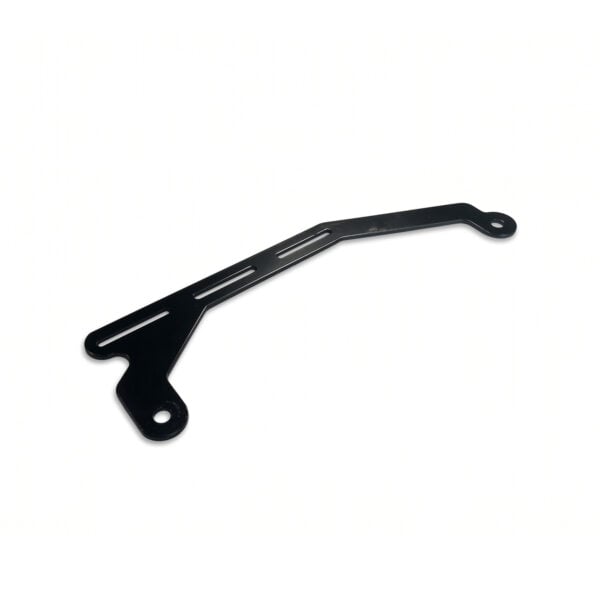
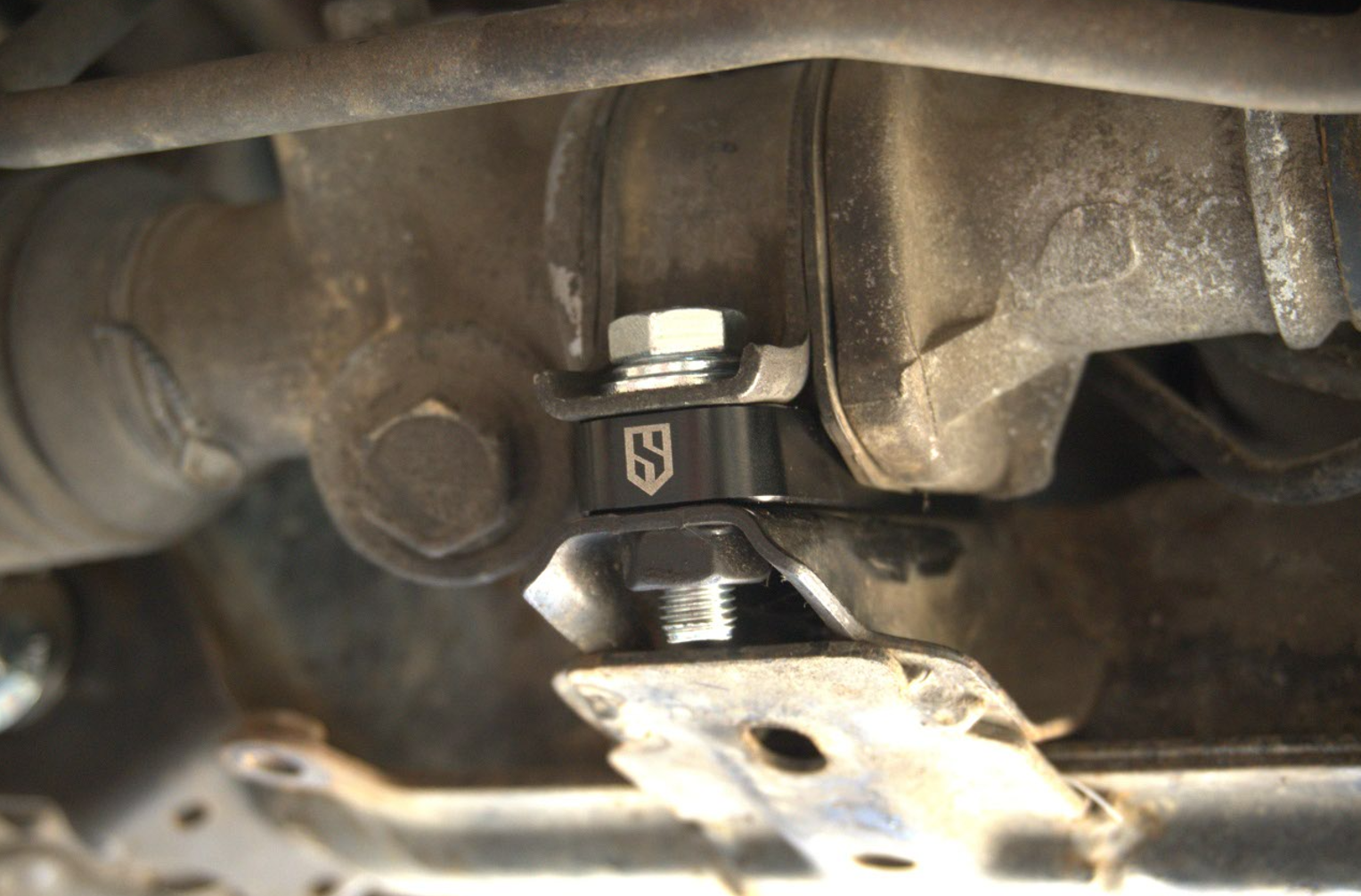
This particular design we’re especially fond of. During the early design phases, we found it surprisingly tricky to reach the left rear bolt (under the A/C compressor) with any of the tools we had in the workshop. This would be a nightmare for the average enthusiast’s typical toolkit. That’s why the inclusion of slotted mounting holes in the spacer, along with the bolt sleeve spacer, makes such a significant difference. These small design details improve installability and the kind of design refinement that produces realistic > 30-minute bolt-ons.

Can You Use Both?
Absolutely. In theory, combining the NASRS with lowered tie-rod ends should provide an even closer match to factory geometry. That said, we haven’t tested both components to assess how comprehensive the correction would be (note* you can overcorrect). This is something we’re looking to explore, and we’d love to hear your thoughts and feedback as we continue to develop new solutions for the Mx-5 platform.